
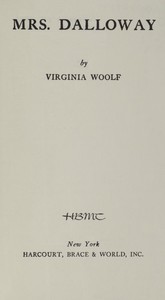
Mrs. Dalloway by Virginia Woolf
Mrs. Dalloway follows Clarissa Dalloway on a single day in June 1923. She's a well-to-do London hostess, and her main task is to buy flowers and prepare for a party she's throwing that evening. But as she walks through the bustling streets, her mind is everywhere but the present. Memories of her youth, a past love named Peter Walsh, and the choice she made to marry the reliable Richard Dalloway instead come flooding back. Her day is a swirl of social errands and internal reflection.
The Story
The book weaves together two main threads. First, we follow Clarissa, moving from her home to the flower shop, back to her house, all while her thoughts jump between the past and the present. The second thread belongs to Septimus Warren Smith, a young veteran shattered by his experiences in World War I. He sits in a park with his wife, trapped in a private hell of hallucinations and despair, while doctors debate how to 'fix' him. Their paths cross only through the city itself—they hear the same car backfire, see the same plane writing in the sky. The novel builds toward Clarissa's party, where all the people from her day and past converge, and news of a tragic event forces her to confront the fragile line between sanity and suffering, celebration and sorrow.
Why You Should Read It
This book changed how I think about novels. Woolf's 'stream of consciousness' style isn't a difficult trick—it feels like finally being honest about how our brains actually work. We never think in perfect, orderly sentences. Our memories punch through while we're chopping vegetables. A sight or sound can throw us back decades. Reading Clarissa's thoughts felt startlingly familiar. More than that, the quiet connection between her and Septimus—two people separated by class and experience, yet linked by a shared, unspoken human fragility—is incredibly moving. It's a book about the pressure to be okay in public, the ghosts of our choices, and the profound impact of a world recovering from trauma, all set against the chimes of Big Ben marking the passing hours.
Final Verdict
Perfect for readers who love character studies and don't mind a plot that lives mostly inside people's heads. If you enjoy piecing together a life from fragments of memory and observation, you'll be rewarded. It's not a fast-paced adventure, but it's a deeply immersive one. Give yourself permission to float along with the prose for the first fifty pages. You might just find, as I did, that Clarissa Dalloway's June day stays with you for a very long time.
This historical work is free of copyright protections. Share knowledge freely with the world.
Amanda Jackson
1 year agoBased on the summary, I decided to read it and the plot twists are genuinely surprising. I learned so much from this.
Karen Walker
8 months agoFast paced, good book.
Joseph Moore
1 year agoHelped me clear up some confusion on the topic.



Betty Miller
1 year agoHaving read this twice, the clarity of the writing makes this accessible. Worth every second.