
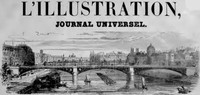
L'Illustration, No. 0025, 19 Août 1843 by Various
Okay, let’s be clear: this isn't a book in the traditional sense. L'Illustration, No. 0025 is a weekly magazine from August 19, 1843. There's no single author or plot. Instead, it's a vibrant collage of a moment in time.
The Story
There is no one story. Opening this is like stepping into a bustling Parisian café and overhearing a dozen conversations. You might find a multi-part serialized novel about romance and betrayal, running alongside a dry parliamentary report. The real stars are the stunning, hand-crafted wood and steel engravings. They show you the news: perhaps the launch of a new steamship, or scenes from France's colonial endeavors in North Africa. There are fashion plates, satirical cartoons poking fun at politicians, reviews of the latest plays at the Comédie-Française, and even advertisements for miracle elixirs and newfangled gadgets. The 'narrative' is the unfolding of modern life—technology, empire, culture, and commerce—all jostling for attention on the page.
Why You Should Read It
I loved it for the texture. Reading a history book tells you what happened. Reading this shows you how it felt. The ads reveal everyday anxieties (bad breath, weak furniture). the illustrations make distant events tangible. You see the faces of the people in the news and the cut of a fashionable waistcoat. It completely shatters the idea of the past as a black-and-white, slow-moving place. This was a world as noisy, commercial, and rapidly changing as our own. The juxtapositions are often jarring and brilliant—a poem next to a stock market table, a tragedy next to a furniture ad. It doesn't have a main character, but the character of the age shines through on every page.
Final Verdict
This is perfect for curious minds who think they don't like history. If you enjoy getting lost in Wikipedia rabbit holes or love the mundane details in historical fiction, you'll be mesmerized. It's also a goldmine for writers, artists, or anyone interested in media. It’s not a page-turner with a climax, but a slow, rich immersion. Think of it as the most detailed, primary-source scrapbook you've ever seen. Just be ready to look things up—half the fun is chasing down the context for a strange news brief or an unfamiliar name. A truly unique and rewarding experience.
This book is widely considered to be in the public domain. Preserving history for future generations.
Emma Jones
10 months agoIf you enjoy this genre, the clarity of the writing makes this accessible. Worth every second.
Emma Hill
1 year agoPerfect.
Margaret White
4 months agoAs someone who reads a lot, the arguments are well-supported by credible references. I learned so much from this.


Donna Gonzalez
1 month agoHelped me clear up some confusion on the topic.