
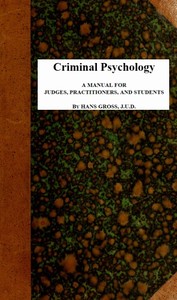
Criminal Psychology: A Manual for Judges, Practitioners, and Students by Hans Gross
Let's be clear from the start: this isn't a thriller. You won't find a gripping plot with a twist ending. Instead, the 'story' here is the story of how criminal investigation stopped being about guesswork and started trying to be a science. Hans Gross was a judge and prosecutor in the late 1800s who saw too many mistakes. His book is his attempt to fix that, creating a step-by-step guide for judges, cops, and doctors.
The Story
The book is a massive checklist and textbook rolled into one. Gross walks you through everything. He starts with how to properly secure a crime scene (don't let everyone trample in!). He explains how to examine physical evidence, from bloodstains and weapons to the dirt on a suspect's shoes. A huge part of the book focuses on people: how to question witnesses, spot liars, and understand the psychology of both the criminal and the innocent person who might crack under pressure. He even has sections on obscure poisons and how to interpret strange symbols found at a scene. The central 'narrative' is Gross's relentless, almost obsessive, drive to systemize the chaotic world of crime.
Why You Should Read It
What grabbed me was the raw, foundational thinking. This is before fingerprints were standard, before psychology was a common word. Gross is building the plane while flying it. His advice ranges from brilliant (meticulously sketching the scene) to oddly specific (how to tell if a 'suicide' note was forged) to products of his time (some now-outdated social ideas). Reading his frustrations and solutions is like watching the bedrock of every police procedural being laid, brick by brick. You gain a deep appreciation for how far we've come and a surprising respect for the clever, low-tech methods they had to rely on.
Final Verdict
This book is a niche, but fantastic, read for a specific audience. It's perfect for true-crime fans who want to go beyond the podcast and understand the history of the tools. It's great for writers who want authentic period details for a historical mystery. And it's a must for anyone interested in the history of science, law, or psychology. It's not a light read, but it's a uniquely fascinating one. Think of it as a museum tour of the criminal mind, guided by its first serious cartographer.
Legal analysis indicates this work is in the public domain. Feel free to use it for personal or commercial purposes.
Ashley White
1 year agoComprehensive and well-researched.
Matthew Scott
2 months agoThis is one of those stories where the storytelling feels authentic and emotionally grounded. I will read more from this author.
Mason Jackson
9 months agoThe fonts used are very comfortable for long reading sessions.
David Young
8 months agoA bit long but worth it.


William Johnson
5 months agoI have to admit, the arguments are well-supported by credible references. I learned so much from this.