
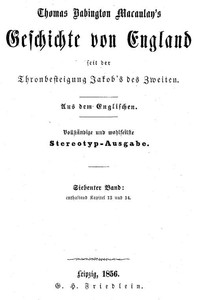
Geschichte von England seit der Thronbesteigung Jakob's des Zweiten. Siebenter…
So, what's this giant book actually about? Let's set the scene: It's 1685, and King James II has just taken the throne of England. He's a Catholic king ruling a fiercely Protestant country. The whole book spins around the massive collision that happens next.
The Story
Macaulay lays out, in incredible detail, how James II's attempts to promote Catholicism and grab more power for the crown completely backfire. We see him alienate almost everyone—the church, the nobles, the army, and regular people. The tension builds as a small group of powerful men, terrified of a return to Catholic rule, secretly write a letter to the Dutch Prince, William of Orange (who is married to James's Protestant daughter, Mary). They invite him to come over and, well, take charge. The book builds to the "Glorious Revolution" of 1688, where William lands with an army, James panics and flees, and the crown is offered to William and Mary under a new set of rules that limited the monarch's power forever. It's the story of how England chose Parliament over absolute monarchy, without a major civil war this time.
Why You Should Read It
You should read this because Macaulay makes you feel the stakes. This isn't a dry analysis. He has a clear point of view: the Glorious Revolution was a glorious, necessary victory for liberty and common sense. He paints James as stubborn and blind, and the revolutionaries as brave pragmatists saving the nation. His character sketches are sharp and memorable. You get a real sense of the paranoia, the whispered plots in London coffee houses, and the sheer relief when the crisis passes peacefully. Reading it, you understand exactly why this event shaped British and American ideas about government for centuries.
Final Verdict
This book is perfect for anyone who loves a deep, narrative-driven dive into a pivotal historical moment. It's for the reader who enjoyed Hilary Mantel's Wolf Hall but wants the real history behind the drama. Be warned: Macaulay is a 19th-century Whig politician, and his history is very much of its time—triumphant, partisan, and certain of Britain's progressive destiny. If you want a neutral, modern academic take, look elsewhere. But if you want to be immersed in a master storyteller's passionate, detailed, and brilliantly argued version of how modern Britain was made, this is an unmatched classic.
This book is widely considered to be in the public domain. Distribute this work to help spread literacy.
Lucas Jones
1 year agoWow.
Barbara Davis
6 months agoI stumbled upon this title and the plot twists are genuinely surprising. Exceeded all my expectations.
Sarah Williams
7 months agoRead this on my tablet, looks great.
Christopher Brown
11 months agoGreat reference material for my coursework.





Kevin White
2 months agoI started reading out of curiosity and it creates a vivid world that you simply do not want to leave. This story will stay with me.