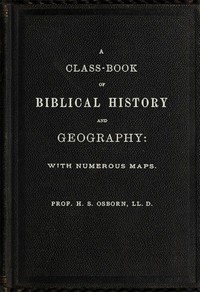
A Class-Book of Biblical History and Geography by H. S. Osborn
Let's be clear from the start: this isn't a novel. H.S. Osborn's A Class-Book of Biblical History and Geography is exactly what the title says—a textbook from 1870 designed for classrooms. But don't let that scare you off. Its structure is its superpower. Osborn walks you through the entire biblical narrative, from Genesis to the early church in Acts, but he does it with one foot firmly planted on the ground. Literally.
The Story
There's no fictional plot here. Instead, the 'story' is the journey of understanding itself. The book systematically pairs major biblical events with the geography where they happened. It explains why certain mountain passes were strategic, how the Jordan River valley influenced settlement, and what the cities Paul visited were actually like. It's a guided tour through time and space, showing how the physical world of the Ancient Near East directly impacted the spiritual and historical events recorded in the Bible. You follow the footsteps of patriarchs, kings, prophets, and apostles, but with a map in hand.
Why You Should Read It
I picked this up out of historical curiosity, but I was struck by how much it made familiar stories feel fresh. Knowing that Jericho sits in a hot, low basin below sea level adds a layer of reality to its conquest. Understanding the network of Roman roads makes Paul's missionary journeys seem less like magic and more like an incredible, grueling feat of travel. Osborn writes with a teacher's heart—it's clear, organized, and assumes no prior expertise. For anyone who engages with the Bible, whether as a person of faith or a student of history, this book provides the crucial, often-missing context. It grounds the epic in the everyday.
Final Verdict
This is a niche read, but a deeply rewarding one. It's perfect for curious Bible readers, homeschoolers looking for a historical resource, or anyone interested in 19th-century education. It's not a page-turner in the traditional sense, but it is a fascinating window into how people of the past understood their scripture and their world. If you enjoy connecting history and place, and don't mind the straightforward style of a classic textbook, you'll find this old guide surprisingly vivid and useful. Think of it as the essential background research for the greatest story ever told.
Legal analysis indicates this work is in the public domain. It serves as a testament to our shared literary heritage.